Fitment and compatibility risk
Returns and warranty claims spike when part numbers, vehicle applications, and sample fitment are not locked before bulk production.
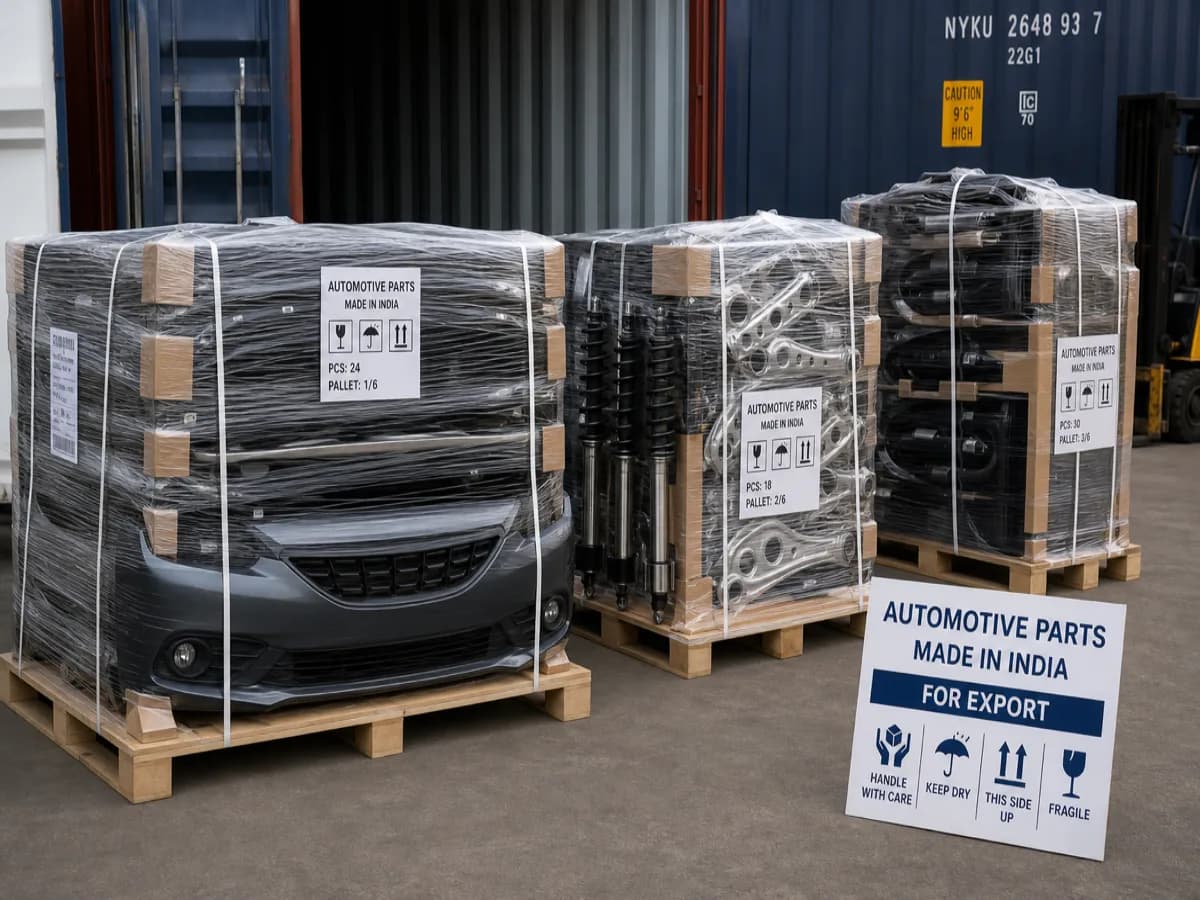
OEM programs and aftermarket lines both fail when fitment, spec level, and export packaging are unclear. We verify suppliers, inspect before shipment, and confirm packaging meets destination requirements.
Auto parts
OEM programs and aftermarket lines both fail when fitment, spec level, and export packaging are unclear. We verify suppliers, inspect before shipment, and confirm packaging meets destination requirements.
Industry challenges
Returns and warranty claims spike when part numbers, vehicle applications, and sample fitment are not locked before bulk production.
Suppliers may quote aftermarket quality at OEM pricing. We document spec level, materials, and branding rights before deposit release.
Lighting, glass, trim, and fragile components need inner-pack and master-carton inspection — not just unit-level QC.
Supplier types
Tier-2 and Tier-3 factories producing to buyer drawings with PPAP-style documentation, tooling ownership clarity, and repeat program capacity.
Suppliers focused on catalog breadth, competitive MOQs, and retail-ready packaging — with fitment data and warranty terms documented upfront.
We confirm whether your contact is the manufacturer or a middleman, and whether export documents will issue in the correct exporter name.
Verification
Step 1
Confirm the supplier can export auto parts in their own name and issue aligned commercial invoices.
Step 2
Validate production, assembly, or consolidation capability for your part category and order volume.
Step 3
Document part numbers, materials, fitment applications, and packaging artwork before production approval.
Quality control
Gate 1
Compare bulk units against approved samples for dimensions, finish, markings, and packaging.
Gate 2
Random sampling with functional checks on filters, electrics, and safety-critical components where applicable.
Gate 3
Document non-conformances and rework before authorizing final payment and booking.
Export readiness
Logistics
Proof
Auto Parts & Aftermarket
A Karachi aftermarket parts distributor needed verified China suppliers for brake, suspension, and filter SKUs across Japanese and Korean vehicle platforms — with OEM-grade QC gates and LCL consolidation for Lahore and Karachi warehouse delivery.
Industrial Machinery & Components
An industrial buyer needed on-the-ground verification of a new machining supplier before committing to a multi-container annual program.
Hardware & Components
A hardware importer required material composition testing and pre-shipment inspection before air freight dispatch of a high-value component order.
Services
Share your parts list, OE or aftermarket requirements, and destination market. We respond with verification and inspection scope.